Register now, make more friends, enjoy more functions, and let you play in the community easily.
You need Sign in Can be downloaded or viewed without an account?Register Now 
x
The movable property pledge business is a business in which banks use the borrower's own goods as collateral to issue credit loans to the borrower. Due to the strong liquidity of movable assets such as raw materials and finished products, as well as the provisions of Chinese laws on the effective conditions for mortgage and pledge, financial institutions face great challenges in logistics tracking, warehousing supervision, mortgage and pledge procedures, price monitoring, and even liquidation of movable assets, which brings huge risks to their loans. Therefore, movable property has never been favored by financial institutions, and even small and medium-sized enterprises with a lot of movable property cannot obtain loans based on it. Based on this, a supply chain financing model was designed for movable property pledge financing under the supply chain.
Zhongxing Finance Bank believes that the movable property pledge financing model under the supply chain refers to the financing business model in which banks and other financial institutions accept movable property as collateral and use the guarantee of core enterprises and the supervision of logistics enterprises to issue loans to small and medium-sized enterprises. In this financing model, financial institutions will sign guarantee contracts or collateral repurchase agreements with core enterprises, stipulating that if small and medium-sized enterprises violate the agreement, the core enterprise will be responsible for repaying or repurchasing the pledged movable property. Supply chain core enterprises often have a large scale and strong strength, so they can help financing enterprises solve financing guarantee difficulties through guarantees, providing collateral, or committing to repurchase, thereby ensuring good cooperation with financing enterprises and stable supply sources or distribution channels. Logistics enterprises provide services such as the storage, value evaluation, and destination supervision of pledged goods, thereby establishing a bridge for fund financing between banks and enterprises. The essence of the movable property pledge financing model is to transfer movable property that financial institutions are not willing to accept(Mainly raw materials and finished products)Transform into movable property pledge products that it is willing to accept, and use them as collateral or counter collateral for credit financing.
The specific operating mode is as follows:
1Small and medium-sized enterprises apply for movable property pledge loans from financial institutions;
2Financial institutions entrust logistics enterprises to evaluate the value of movable property provided by small and medium-sized enterprises:
3Logistics companies conduct value evaluations and provide evaluation certificates to financial institutions;
4If the movable property status meets the pledge conditions, financial institutions shall determine the loan amount, sign movable property pledge contracts with small and medium-sized enterprises, sign repurchase agreements with core enterprises, and sign warehousing supervision agreements with logistics enterprises;
5Small and medium-sized enterprises transfer movable property to logistics enterprises;
6Logistics enterprises shall inspect the movable property transferred by small and medium-sized enterprises and notify financial institutions to issue loans;
7Financial institutions provide loans to small and medium-sized enterprises.
The movable property pledge financing model under the supply chain is an innovative comprehensive service that integrates logistics services, financial services, and warehousing services. It effectively combines, interacts, and comprehensively manages logistics, information flow, and capital flow. A comprehensive service aimed at expanding services, optimizing resources, improving operational efficiency, enhancing overall supply chain performance, and increasing the competitiveness of the entire supply chain.
With the development of market competition and customer demand, the financing model of movable property pledge under the supply chain has also developed and innovated, and dynamic movable property pledge business has emerged, that is, approved inventory pledge business, compared to static movable property pledge business(Non fixed inventory pledge)The biggest difference is that:In dynamic movable property pledge, banks not only determine the pledge rate for the borrowed enterprise's goods and provide a certain proportion of credit amount, but also determine a minimum value control line based on the value of inventory. When the value of goods is above the control line, the borrowing enterprise can apply to a third-party enterprise for pick-up or exchange on its own:When the value of the goods is below the control line, the borrowing enterprise must apply to the commercial bank, and the third-party logistics enterprise will pick up or exchange the goods according to the bank's instructions;For the static movable property pledge business, borrowing enterprises are not allowed to arbitrarily withdraw or replace the goods they have pledged to commercial banks, unless they add a deposit, repay bank credit, or add other guarantees.
The pledge of movable property can also be operated through the warehouse receipt pledge mode. The warehouse receipt can be used as a certificate of rights for pledge. If the warehouse receipt is pledged, the certificate of rights should be pledged to the pledgee within the period specified in the contract, and the pledge contract certificate shall take effect from the date of delivery. Warehouse receipt generally refers to the warehouse operator accepting customers(Shipper)A deposit receipt issued to the depositor to explain the inventory situation after the goods are stored and stored on behalf of. Warehouse receipt pledge can generally be divided into two modes: standard warehouse receipt pledge and non-standard warehouse receipt pledge:
1Standard warehouse receipts refer to those issued byfuturesThe standard warehouse receipt, which is uniformly formulated by the exchange and is issued to the consignor and registered with the futures exchange after the designated delivery warehouse of the futures exchange completes the acceptance and confirmation of the incoming goods, can be used for delivery, trading, transfer, mortgage, pledge, and cancellation after being registered with the futures exchange. Standard warehouse receipt pledge refers to commercial banks using standard warehouse receipts as collateral to eligible borrowers(Pledgor)Credit business with a certain amount of financing.
2Non standard warehouse receipts refer to equity certificates issued by third-party logistics enterprises recognized and evaluated by commercial banks, in the form of general products with strong liquidity in the production and logistics fields. Non standard single pledge refers to a commercial bank pledging collateral in a non-standard warehouse unit to eligible borrowers(Pledgor)Credit business with a certain amount of financing. Starting from the field of logistics finance in cooperation between Chinese commercial banks and third-party logistics enterprises, non-standard warehouse receipt pledge business is more representative. |
"Small gifts, come to Huiyi to support me"
No one has offered a reward yet. Give me some support
|


 Aurra Markets观察:退潮之后,是谁
今年一季度,全球黄金市场曾出现过一波明显的“拥挤交易”。黄金 ETF 交易量激增,
Aurra Markets观察:退潮之后,是谁
今年一季度,全球黄金市场曾出现过一波明显的“拥挤交易”。黄金 ETF 交易量激增,
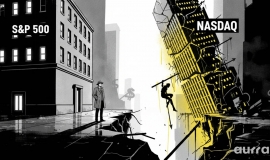
 Aurra Markets:标普 500 指数走势展
S&P 500 指数稳中有进,纳斯达克指数为何承压难行? 美国主要股指正呈现出显著的分
Aurra Markets:标普 500 指数走势展
S&P 500 指数稳中有进,纳斯达克指数为何承压难行? 美国主要股指正呈现出显著的分
 Aurra Markets:OpenAI 秘密递交华尔
OpenAISubmit IPO 申请对人工智能的未来意味着什么? OpenAI 近日启动首次公开募股(I
Aurra Markets:OpenAI 秘密递交华尔
OpenAISubmit IPO 申请对人工智能的未来意味着什么? OpenAI 近日启动首次公开募股(I
 ZFX山海证券:金价探底回升!
Monday(6month8日)金价一度跌至近两个半月以来的最低点4268美元附近,但随后又神奇地收复
ZFX山海证券:金价探底回升!
Monday(6month8日)金价一度跌至近两个半月以来的最低点4268美元附近,但随后又神奇地收复
 香港黄金交易所金条金币介绍
Hong Kong Gold and Silver Trading Centre&香港黄金交易所:股市有证券交易所,黄金也有交易所,香港黄金交易
香港黄金交易所金条金币介绍
Hong Kong Gold and Silver Trading Centre&香港黄金交易所:股市有证券交易所,黄金也有交易所,香港黄金交易





 Riser card
 Top card
 Silence card
 Color changing card
 lifting jack