Register now, make more friends, enjoy more functions, and let you play in the community easily.
You need Sign in Can be downloaded or viewed without an account?Register Now 
x
Today we will focus on whether President Trump's first speech in Congress will put forward clear policy proposals, which will directly affect the trend of risky assets. The recent strength of US stocks and commodities has been greatly influenced by the direction of the Trump administration, but it has already been digested too much. Therefore, today's prevention measures may lead to the withdrawal of funds from risky assets due to lack of clear direction or details, resulting in significant market fluctuations.
The current policies that Trump urgently needs to introduce include border tax issues, corporate and middle-class tax cuts, and infrastructure stimulus plans. Yesterday, Trump specifically proposed in his speech to increase military spending, reflecting his policy direction of relying on investment and reducing corporate costs to drive the economy. By analyzing the impact of subsequent policies on the trend of the US dollar at this level, it can be concluded that it needs to maintain a relatively low interest rate environment and exchange rate conditions. A large amount of investment in infrastructure and other areas will increase market liquidity, thereby suppressing the trend of the US dollar. The trade protection policy of border taxes requires a weak US dollar to maintain. Therefore, overall, the medium to long term trend of the US dollar should be dominated by weakness. Due to the expected impact of tax cuts on the economy in the near future, future economic growth and employment issues will be relatively optimistic, which increases the expectation of a recent interest rate hike. Therefore, there is a possibility of a slight strengthening of the US dollar in the short term, and attention should be paid to the risks.
Today's data needs to focus on the evening EurozoneCPIAnd the fourth quarter in the United StatesGDPThe correction value data will have a certain impact on the market, but in the context of Trump's speech, the influence of the data will diminish.
In terms of specific technical aspects,USD IndexThe daily structure tested again yesterday, and after gaining support from the Bollinger Bands, it closed with a rebounding lower shadow and a longer small bearish line. The future structure is more inclined to end the platform type consolidation analyzed earlier and begin to rebound upwards. Target location102.5On the front line, if today falls below yesterday's low due to Trump's speech, it will turn into a bearish trend.
The daily structure of the euro against the US dollar rebounded yesterday, testing the resistance level in the middle track of the Bollinger Bands1.0630After the interval, it fell back and collected a longer upper shadow linekLine, with a bearish pattern, will fall again in the future. There is a high probability of a low before testing, but it can rebound today. Testing yesterday's upper shadow line half percentile1.0610Short selling in nearby light positions,1.0660Stop loss.


Although the USD/JPY closed at a low bullish line yesterday, it has not yet reached the short-term moving average, so the operational strategy remains bearish, which can be seen in the middle of the Bollinger Bands113.1Short selling nearby.113.8Stop loss. Due to the possibility of an upward trend in the US dollar, the risk of short positions in the US and Japan is relatively high, and a strict stop loss strategy is required for light positions during operations.
Although the euro/yen closed a strong rebound against the long bullish line yesterday, it is not a standard bottom swallowing pattern and has not stood above it10Before the daily moving average, there may still be a rebound consolidation. In terms of operation, we can wait and see for testing10We will make specific operations based on the strength after the daily moving average.

EFS Analyst: Chen Yunbo |
"Small gifts, come to Huiyi to support me"
No one has offered a reward yet. Give me some support
|


 Aurra Markets观察:退潮之后,是谁
今年一季度,全球黄金市场曾出现过一波明显的“拥挤交易”。黄金 ETF 交易量激增,
Aurra Markets观察:退潮之后,是谁
今年一季度,全球黄金市场曾出现过一波明显的“拥挤交易”。黄金 ETF 交易量激增,
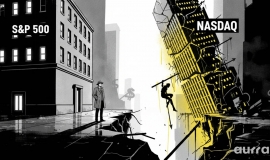
 Aurra Markets:标普 500 指数走势展
S&P 500 指数稳中有进,纳斯达克指数为何承压难行? 美国主要股指正呈现出显著的分
Aurra Markets:标普 500 指数走势展
S&P 500 指数稳中有进,纳斯达克指数为何承压难行? 美国主要股指正呈现出显著的分
 Aurra Markets:OpenAI 秘密递交华尔
OpenAISubmit IPO 申请对人工智能的未来意味着什么? OpenAI 近日启动首次公开募股(I
Aurra Markets:OpenAI 秘密递交华尔
OpenAISubmit IPO 申请对人工智能的未来意味着什么? OpenAI 近日启动首次公开募股(I
 ZFX山海证券:金价探底回升!
Monday(6month8日)金价一度跌至近两个半月以来的最低点4268美元附近,但随后又神奇地收复
ZFX山海证券:金价探底回升!
Monday(6month8日)金价一度跌至近两个半月以来的最低点4268美元附近,但随后又神奇地收复
 香港黄金交易所金条金币介绍
Hong Kong Gold and Silver Trading Centre&香港黄金交易所:股市有证券交易所,黄金也有交易所,香港黄金交易
香港黄金交易所金条金币介绍
Hong Kong Gold and Silver Trading Centre&香港黄金交易所:股市有证券交易所,黄金也有交易所,香港黄金交易





 Riser card
 Top card
 Silence card
 Color changing card
 lifting jack