Register now, make more friends, enjoy more functions, and let you play in the community easily.
You need Sign in Can be downloaded or viewed without an account?Register Now 
x
This post was finally written by Aurra_Official to 2026-6-22 14:53 edit

Why WTI crude oilIs there a significant increase driven by geopolitical news? Recently, the evolution of the geopolitical situation, especially the tense situation surrounding the key waterway of the Strait of Hormuz, has triggered WTI The severe fluctuations in the crude oil market. The current market environment is full of the possibility of high risks and high returns, and any news about supply disruptions may instantly surpass the dominant position of traditional fundamental analysis.
At present, the market is gradually digesting significant geopolitical risk premiums, a phenomenon that has not been uncommon in history. Whether it is an actual interruption or only a threat of interruption, the obstruction of oil transportation through the Strait of Hormuz in history often leads to a sharp rise in oil prices, although such increases are mostly short-term phenomena. This model 1980 The oil tanker war of the era was particularly prominent, and its impact remains strong to this day. Although from a more macro perspective of supply and demand, oil prices may face downward pressure, especially in the context of a possible agreement between the United States and Iran, traders need to be aware that in the short term, "news risk" remains the dominant force in the market. This means that there may be a significant breakthrough in technology, making risk management particularly crucial.
Geopolitical Turmoil: The Main Driver of Current Oil Prices The determining factor of current crude oil prices is no longer mainly based on actual oil production, but on the supply of crude oil facing risks. The situation in the Middle East has become the primary variable of concern for traders, and any progress could be transmitted to oil price fluctuations in a very short period of time.
Strait of Hormuz: Key Throat Passage Iran's decision to close the Strait of Hormuz has become a direct catalyst for the recent rise in oil prices. As a key throat channel for global energy transportation, this strait carries a significant proportion of the world's seaborne crude oil.
Its closure is equivalent to removing millions of barrels of potential supply from the market, triggering a supply shock and pushing up oil prices. The duration of this lockdown has now become a key variable determining the next major trend of the market.
The US Iran Agreement: A Fragile Agreement The background of the current situation is the recently signed US Iran agreement. The agreement was originally interpreted by the market as a bearish oil price factor, as it was expected that Iran would be able to expand exports, thereby increasing global supply.
However, the subsequent escalation of the situation and the closure of the Strait of Hormuz indicate that the stability of this agreement is extremely fragile. The market is currently pricing two conflicting expectations simultaneously: the potential increase in Iranian supply in the future, and the risk of supply disruption that has already occurred.
Assessment of Geopolitical Risk Premium The so-called 'risk premium' refers to the additional price paid by the market due to uncertainty in future supply. This premium will rapidly expand or contract with news events.
Once the situation eases and the risk premium subsides, oil prices may significantly fall; On the contrary, if the conflict escalates further, oil prices may soar significantly. In such high volatility markets, execution efficiency is crucial. Our platform's strong liquidity guarantee ensures that your orders are quickly executed at the ideal price.
Supply and demand fundamentals While geopolitical news dominates the short-term market, the medium - to long-term trend of the crude oil market still depends on potential supply and demand dynamics. Once the current crisis subsides, these fundamental forces will once again dominate the market direction, so traders need to always keep an eye on them.
US crude oil inventories decline US Energy Information Administration(EIA)The data continues to show that US crude oil inventories are on a downward trend. The continuous decrease in inventory indicates that demand remains strong, providing solid bottom support for oil prices.
Even in times of escalating geopolitical tensions, the tight equilibrium state of the market itself can amplify the impact of any supply disruption on prices.
Russia's supply concerns The Russian crude oil supply side also faces uncertainty. The recent drone attacks on key refining facilities have posed certain constraints on their production capacity.
Meanwhile, there are reports that Russia has started importing gasoline by sea, which is seen by the market as a signal of a shortage of domestic refined oil supply. The limited production in Russia has further exacerbated the global supply-demand tension, adding impetus to the strengthening of oil prices.
Long term suppression of Iran's expected increase in production Although the short-term focus is on the risks in the Strait of Hormuz, the long-term impact of the US Iran agreement cannot be ignored. If the agreement is maintained and sanctions are relaxed, Iran will have the ability to push a large amount of crude oil back into the international market.
This potential supply return is a key factor limiting the long-term upward space of oil prices, and also constitutes the core logic of some analysts' expectations that oil prices may return to a downward trend in the future.
Technical Trends and Strategic Layout In high volatility markets driven by news, technical analysis provides an important trading framework that helps identify key turning points, set target positions, and effectively control risks.
80Analysis of Key Resistance Levels for the US Dollar WTI The technical chart of crude oil shows that per barrel 80 There is a significant resistance zone near the US dollar. This level is both a psychological barrier and a previously price intensive trading area.
If oil prices can continue to stand firm 80 The US dollar will be a strong bullish signal, which may open up space for testing higher prices; On the contrary, if the resistance cannot be broken, its top position may be confirmed, which could trigger a sell-off.
Focus on Fibonacci and moving averages From a more macro perspective, WTI Oil prices are interacting with multiple key technical indicators. Oil prices continue to run at 50 Weekly moving average of the index(EMA)Below, this is usually a signal of a long-term bearish trend.
In addition,80 The resistance level of the US dollar coincides with the key Fibonacci retracement level, further enhancing its technical significance. Multiple indicators intersect here, making the current price range a strategic location fiercely contested by both long and short sides.
Trading execution in volatile market conditions Trading in a high volatility market dominated by news requires a robust platform and clear strategies. The risk of slippage is high, and the ability to accurately enter and exit the field is crucial.
Our platform is committed to technological leadership, with 99.9% The system availability and ultra fast order execution are important foundations for traders to capture opportunities and control risks in complex market conditions.
Operational strategies that can be executed this week If diplomatic efforts to reopen the Strait of Hormuz in the coming days fail to make progress, The market's attention to supply disruptions will further intensify,WTI Crude oil prices may quickly test per barrel 80 The resistance level of the US dollar. This scenario may be accompanied by rapid price fluctuations and extremely high market volatility.
For traders who hope to seize such event driven opportunities, A stable and reliable execution platform is indispensable.MetaTrader 5(MT5)The deep liquidity and high-speed order processing capabilities provided by the platform help to efficiently execute trading instructions in highly volatile markets, reducing technical delays and slippage risks.
Key Summary - The current geopolitical tension around the Strait of Hormuz is WTI crude oilThe main driving force behind price fluctuations.
- The market is torn between the potential supply return brought about by the US Iran agreement and the risk of short-term supply disruption.
- The continuous decline in US inventory and supply issues from Russia have jointly created a market environment with tight fundamentals.
- per barrel 80 dollarAs a key technical resistance area, effectively breaking through this price range may open up further upward space.
- In high volatility environments, it is necessary to rely on reliable platforms with deep liquidity and fast execution capabilities to manage risks and capture opportunities.
How do you take into account geopolitical news risks in trading strategies for commodities such as crude oil? Welcome to share your insights in the comment section.
Risk Disclosure:Any opinions, news, research, analysis, quotations or other information contained on this website are for general market commentary purposes only, for reference purposes only, and do not constitute any investment advice.Aurra Markets We shall not be liable for any loss or damage (including but not limited to any loss of profit) directly or indirectly caused by the use or reliance on such information.
about Aurra Markets Retail traders also deserve to enjoy an institutional level trading environment.Aurra Markets Directly send your MT5 The trading terminal is connected to a deep liquidity pool, allowing you to enjoy an efficient trading experience with lower spreads and zero duplicate quotes. As a digital broker, we provide efficient deposit services to seamlessly connect transactions.
| 
 黄金暴跌,黄金高波动行情交易技巧
11month16日周一,国际现货黄金短线大跳水,最新价位低至3832dollar/盎司,走势偏承压回落
 Aurra Markets:【白银走势展望】收
供应偏紧,为何白银仍表现疲软?受鹰派利率环境影响,白银正面临沉重的抛售压力,价
 Aurra Markets:AI 行业承压,Anthro
Anthropic IPO 能否重振 AI 行业?AI 行业近期接连遭遇挑战,Anthropic 即将启动的
 伦敦金一手保证金是多少?
伦敦金属于保证金交易品种,很多新手都会问伦敦金一手保证金是多少。当前香港现货黄金
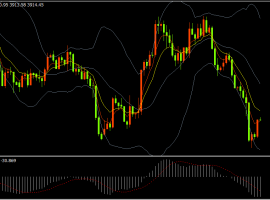 汉声集团:黄金行情跌超100美元,估
昨晚美元延续走强,现货黄金跌破3900At the US dollar level, the lowest is3852.50dollar/盎司,金价最终报收






 Riser card
 Top card
 Silence card
 Color changing card
 lifting jack