Register now, make more friends, enjoy more functions, and let you play in the community easily.
You need Sign in Can be downloaded or viewed without an account?Register Now 
x
Contract for difference(CFD)It is a financial derivative instrument that is a contract between an investor (or trader) and a broker, where the trader is required to pay the price difference between the opening and closing prices of the transaction.

What is?CFD?CFDAllow traders to speculate on the price of underlying assets, but traders do not actually hold the underlying assets, but rather trade derivative contracts provided by brokers. These contracts allow traders to go long (bullish) or short (bearish), making profits in both bull and bear markets. CFDThe tools are very diverse, and brokers typically offer a variety of legally permissible asset classes, including: ⚠️ Attention: Some regulatory agencies impose restrictions on high-risk assetsCFDThere are restrictions on transactions. For example, regulatory agencies in the UK do not allow brokers to provide cryptocurrency to retail tradersCFD。 Most spot goodsCFD(such as stocks and indices) have no expiration date, meaning positions remain open until the trader voluntarily closes them. However, some productsCFDand futuresCFDThere may be an expiration date.
CFDAdvantages of TradingCFDCompared to other derivatives or traditional trading methods, it has many advantages, mainly including: Leveraged trading: Traders only need to invest a small amount of funds (margin) to open larger positions, and profits and losses are calculated based on the total position value. However, leveraged trading carries extremely high risks (as detailed in subsequent chapters). Long and Short: Traders can choose to go long (buy) based on market expectationsCFD)Or short (sell)CFD)Even if the market falls, profits can still be made. Low entry threshold: compared to optionFutures and other derivatives,CFDThe initial margin requirement for trading is lower, and the minimum trading volume is also smaller, making it easier for novice traders to enter. Widely tradable in the market:CFDBrokers typically offer market trading in foreign exchange, indices, commodities, stocks, cryptocurrencies, and other currencies (some jurisdictions prohibit cryptocurrencies)CFDTrading). No physical delivery required:CFDIt is a cash settlement tool, and traders do not need to worry about physical delivery after the position expires.
CFD Risk of TradingalthoughCFDTrading has many advantages, but it is still a complex and high-risk financial derivative. Although the possibility of high returns may attract novice investors, they must fully understand the associated risks. Leverage may bring significant risksLeverage is what attracts traders to participateCFDOne of the main factors in trading. However, if traders fail to fully understand the operating mechanism of leverage, they may quickly lose all their capital. Counterparty risk(Counterparty Risk)CFD yes Off exchange trading(OTC) Tools, which means brokers are the direct counterparties of traders. Some brokers pass trading orders to liquidity providers(A-bookMode) to reduce counterparty risk. Other brokers adopt B-bookMode, which means holding opposite positions to the trader, and when the trader incurs losses, the broker gains.
Regulatory restrictions(Regulatory Challenges)CFD Trading is strictly regulated, and multiple countries have imposed restrictions on its leverage ratio and marketing promotion UK, EU, AustraliaCFDStrictly control the leverage ratio and promotion of trading. United States, Belgium****Completely prohibitedCFDTransactions. Hong Kong is affected by its gambling lawsCFDRestrictions are imposed on the distribution of the product, and it cannot be traded unless it is subject to official regulation.
Understand leverage and marginThe lever isCFDOne of the main advantages of trading, but it also brings high risks. Leverage allows traders to open larger positions with less capital, amplifying potential returns while also increasing the risk of losses. Example of leverage ratioLeverage is usually expressed in proportion, such as 100:1、50:1、30:1 and 10:1。 100:1 Leverage: Traders only need to $100 Can be opened now $10,000 Position (initial capital) 100 Double). 10:1 Leverage: Traders need to $1,000 Only then can it be opened $10,000 Position (initial capital) 10 Double).
Leverage can amplify profits, but it can also amplify losses, even exceeding the initial investment. Therefore, many regulatory agencies mandate negative balance protection(Negative Balance Protection)Ensure that traders do not lose more than their account funds due to leveraged trading.
CFD Example of Trading LeverageTransaction case:EUR/USD Currency pairYou predict that the price of the euro against the US dollar will rise and decide to tradeEUR/USD CFDProvided by brokers 30:1 Leverage means you only need to pay for the total value of the transaction 3.33% As a margin. Transaction parameters | calculate | result | Transaction size | - | $10,000 | Required deposit | $10,000 ÷ 30 | $333.33 |
Profit situation(Scenario 1)The market is favorable to you EUR/USDrise in price1%You earn $100(1% × $10,000)。 Return rate:$100 ÷ $333.33 = 30%The return rate of margin is very high.
Loss situation(Scenario 2)The market is not favorable to you EUR/USDPrice decline1%You are losing money $100(1% × $10,000)。 Loss ratio:$100 ÷ $333.33 = 30%(Losses are also amplified by leverage).
IfEUR/USD fall3.33%You will lose all the margin $333.33The account may be forcibly liquidated (liquidated). The leverage ratio varies depending on the asset class, typically for mainstream foreign exchange currency pairsCFDThe highest leverage, while cryptocurrencyCFDDue to high volatility, the leverage limit is the lowest
CFD transaction cost The trading costs of derivatives are more complex compared to spot stocks. Understanding these costs for CFD Traders are crucial as they may affect the overall trading outcome (profit or loss). CFD Transaction costs can be classified into the following categories:
Spread(Spreads)The spread is CFD The difference between the buying and selling prices in a transaction, also known as the bid ask spread(Bid-Ask Spread)(Bid For the selling price,Ask For the purchase price. The spread is usuallyCFD The main source of income for brokers. Brokers typically use 'narrow spreads'(tight spread)”And 'Wide Spread'(wide spread)”To promote its trading services. **Narrow spread(tight spread)**This means that the difference between the buying and selling prices is small and the transaction cost is lower. **Wide spread(wide spread)**It indicates that there is a significant difference between the buying and selling prices, resulting in higher transaction costs.
CFD Example of Spread in TradingAssuming you are trading gold CFDYour broker provides the following quote: Selling price(Bid):$1,980 Purchase price(Ask):$1,981 Spread = $1,981 - $1,980 = $1
Spread can have a significant impact on trading profitability. How do spreads affect trading📌 When opening a warehouse Assuming you predict that the price of gold will rise, therefore you $1,981 Open a long position at the buying price. But at the moment you place your order, the value of your position is the selling price $1,980。 You were in a position from the beginning $1 Floating loss (equal to spread).
📌 When market prices change If the gold price rises to $1,990(Bid)/$1,991(Ask)You can sell at the selling price $1,990 close a position. Your trading profit is calculated as follows: 1,990(Selling price) - 1,981(Purchase price) = $9 \text{(Profit, after deducting spreads)}
Different situations of the impact of spreads on trading
Commission(Commissions)shares CFD Trading usually involves commissions, and many brokers charge a certain percentage of commission for opening and closing positions. These commissions can be calculated based on a fixed amount or a percentage of the transaction value. CFD Example of commission in transactionsAssuming you decide to trade Apple(Apple)Stocks CFD, brokers charge 0.1% Commission (applicable for opening and closing positions). Transaction size: You plan to purchase 50 The current price of Apple stock is $150/thigh Total transaction value: 50×150=$7,500 Opening commission: 0.1%×7,500=$7.5 Closing commission (assuming Apple's stock price remains unchanged) $150/Stock): 0.1%×7,500=$7.5 Total commission cost: $7.50(Opening warehouse)+$7.50(Closing position)=$15.00
The impact of commission costs on transaction profits and losses
Assuming that the stock price of Apple rises to $155/Stocks, you decide to close your position: New transaction value: 50×155=$7,750 Gross profit (excluding commission): 7,750−7,500=$250 Net profit (after deducting commission): 250−15=$235
The impact of commissions on traders📌 The impact of small-scale transactions 📌 Frequent transaction costs 📌 commission vs. Spread Some brokers may offer zero commission stocks CFDBut the spread is relatively wide. Other brokers may charge commissions but offer lower spreads. Traders should calculate the overall trading cost and choose the account type that best suits their strategy.
Overnight feesOvernight fees(Overnight fees, also known as swap fee(Swap Fees)Or extension cost(Rollover Costs))It refers to whenCFD The position remains open after the end of the trading day (usually New York time) afternoon 5 The fees that traders need to pay when clicking. This fee is used to cover the financing costs of leveraged positions, as brokers lend funds to traders in actual operations to maintain transactions. Overnight fees depend on the following factors:Position size(Trade Size) Broker's financing interest rate(Broker’s Financing Rate) Trading direction(Direction of Trade):
Going long (buying): usually requires paying interest fees. Short selling: may require payment of fees or interest returns, depending on the asset class and market interest rates.
How to calculate overnight fees?The formula for calculating overnight fees is usually: Overnight fees=Transaction scale x financing interest rate/ 365
Transaction scale(Trade Size):CFD The total value of the position held. Financing interest rate(Financing Rate)Usually determined by benchmark interest rates (such as central bank interest rates)+ Calculated by the broker's markup.
Example 1Overnight fees for long positionsAssuming you areFTSE 100 Open on the indexCFD Long position, trading details are as follows: parameter | numerical value | Transaction size | £10,000 | lever | 20:1(Deposit) £500) | Annual financing interest rate | 4.5% |
Annual financing cost: £10,000×4.5%=£450 Daily cost: £450÷365=£1.23 step 2: Apply overnight fees If you hold a position 7 The total overnight fee is: £1.23×7=£8.61
Example 2Overnight fees for short positionsAssuming you areEUR/USD Currency pair openingCFD Short position, trading details are as follows: parameter | numerical value | Transaction size | $20,000 | lever | 30:1(Deposit) $666.67) | Annual financing interest rate | -2.5%(You will receive interest returns) |
Annual financing return: $20,000 \times -2.5\% = -$500/year Daily return: -$500 \div 365 = -$1.37/day step 2: Apply overnight interestIf you hold a position 10 The total interest return you will receive is: - $1.37 \times 10 = -$13.70 Market data feesCFD Brokers typically charge a fee to provide real-time or delayed market price data, which is referred to as market data fees(Market Data Fees)。 Market data fees are usually related to the authorization costs of exchanges or third-party data providers. Brokers usually follow Monthly or Annual Collect market data fees.
stay Ultima Markets transaction CFDUltima Markets We are a licensed and compliant broker that provides250+Trading of various financial instruments, including foreign exchange currency pairs, precious metals crude oilIndices, stocks, and cryptocurrencies. We offer the highest 2000:1 Leverage and ensure highly competitive spreads and fast execution. At the same time, our price transparency helps traders have a clear understanding of transaction costs.
| 
 Aurra Markets:【欧元兑美元走势预
欧元兑美元强势反弹:关键阻力位面临突破还是假突破?能源价格回落及美元走软,为欧
 Aurra Markets:10 月就业报告前瞻,
10 月就业报告有何值得关注的看点?定于周五公布的 10 月就业报告备受市场关注,预
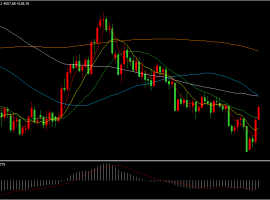 美国中期选举结果对黄金影响巨大!SI
this morning11.5国际现货黄金延续了前一日的强势,现货黄金盘中突破4100dollar/盎司,一度触及4
 Aurra Markets:铜价面临关键抉择,
铜价是否预示全球经济格局正在转向?当前,铜价正处于关键十字路口,短期经济逆风与
 Aurra Markets:美国民主党与国会:
民主党掌控国会将如何影响您的财务状况?近期美国选举带来了美国政坛的重大变化,民






 Riser card
 Top card
 Silence card
 Color changing card
 lifting jack