Register now, make more friends, enjoy more functions, and let you play in the community easily.
You need Sign in Can be downloaded or viewed without an account?Register Now 
x
There are many factors that affect exchange rate fluctuations, but in summary, there are mainly the following:
The economic growth rate of a country is the most fundamental factor affecting exchange rate fluctuations. According to the macroeconomic theory of the Keynesian school, the growth of gross domestic product will lead to an increase in national income and expenditure. An increase in income will lead to an expansion in demand for imported products, which in turn will expand the demand for imported productsforeign exchangeThe demand is driving the depreciation of the local currency. The growth of expenditure means an increase in social investment and consumption, which is conducive to promoting the development of production, improving the international competitiveness of products, and stimulating exports to increase foreign exchange supply. So in the long run, economic growth will lead to currency appreciation. From this perspective, the impact of economic growth on exchange rates is complex. But if we consider the role of currency preservation, exchange psychology has another explanation. The value of currency depends on the subjective evaluation of currency by both the supply and demand sides of foreign exchange, and the comparison of this subjective evaluation is the exchange rate. If a country's economic development trend is good, the subjective evaluation is relatively high, and the country's currency is strong.
The balance of international payments is the most direct factor affecting exchange rates. The so-called balance of payments, in simple terms, refers to the import and export of goods and services, as well as the input and output of capital. If exports exceed imports and capital flows into the international balance of payments, it means that the demand for the country's currency in the international market increases, and the domestic currency will rise. On the contrary, if imports exceed exports and capital flows out, the demand for the country's currency in the international market will decrease, and the local currency will depreciate.
The difference between price levels and inflation levels is fundamentally determined by the actual value represented by the currency under the paper currency system. According to purchasing power evaluation, the ratio of currency purchasing power is the exchange rate of currency. If a country's price level is high and inflation rate is high, it indicates a decrease in the purchasing power of its currency, which will lead to its depreciation. On the contrary, it tends to appreciate in value.
Some scholars believe that the impact of interest rates on exchange rates is mainly achieved through their impact on arbitrage capital flows. Under mild inflation, higher interest rates attract foreign capital inflows, while suppressing domestic demand and reducing imports, leading to an increase in the domestic currency. But under severe inflation, there is a negative correlation between interest rates and exchange rates.
People's psychological expectations are particularly prominent in the current international financial market. Exchange psychology believes that foreign exchange rates are a concentrated reflection of the subjective psychological evaluation of currency by both the supply and demand sides of foreign exchange. If the evaluation is high and the confidence is strong, the currency will appreciate. This theory has played a crucial role in explaining countless short-term or extremely short-term exchange rate fluctuations.
In addition, factors that affect exchange rate fluctuations include government monetary and exchange rate policies, the impact of unexpected events, the impact of international speculation, the release of economic data, and even the impact of opening and closing. |
"Small gifts, come to Huiyi to support me"
No one has offered a reward yet. Give me some support
|


 7month10日午后黄金策略:金价回落至411
目前消息面对黄金还是偏压制。市场对美国利率继续维持高位、甚至进一步收紧的预期有
7month10日午后黄金策略:金价回落至411
目前消息面对黄金还是偏压制。市场对美国利率继续维持高位、甚至进一步收紧的预期有
 ZFX山海证券:金价惊险重返4100dollar
7month9日,国际黄金市场上演了一场惊心动魄的逆转大戏。在经历了连续三个交易日的下跌之
ZFX山海证券:金价惊险重返4100dollar
7month9日,国际黄金市场上演了一场惊心动魄的逆转大戏。在经历了连续三个交易日的下跌之
 ZFX山海证券:金价坚守4000Pass!
Wednesday(7month8日)现货黄金价格一度跌至4020美元附近,油价应声暴涨逾5%,刷新逾两周高点
ZFX山海证券:金价坚守4000Pass!
Wednesday(7month8日)现货黄金价格一度跌至4020美元附近,油价应声暴涨逾5%,刷新逾两周高点
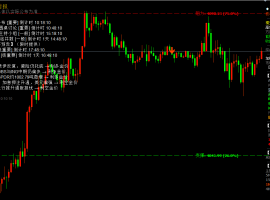 7month9日早上黄金策略:金价深V反弹后
昨晚黄金走了一波急跌,盘中一度逼近4020关口,随后展开深V反弹收复大部分跌幅,最
7month9日早上黄金策略:金价深V反弹后
昨晚黄金走了一波急跌,盘中一度逼近4020关口,随后展开深V反弹收复大部分跌幅,最
 ZFX山海证券:金价被油价大涨压制!
Tuesday(7month7日),油价大幅飙升,现货黄金当日下跌1.42%, receive reports per ounce4105美元,盘中一
ZFX山海证券:金价被油价大涨压制!
Tuesday(7month7日),油价大幅飙升,现货黄金当日下跌1.42%, receive reports per ounce4105美元,盘中一





 Riser card
 Top card
 Silence card
 Color changing card
 lifting jack