| [tr][td] |
| 1、 Speculation with idle money, investing with winning money. The funds used by investors for speculation must be idle money that can be lost, and should not be used with other funds or assets. If it is used for speculation with living expensesforeign exchangeInvestors may be unable to make correct judgments due to excessive concerns, ultimately leading to speculation failure. After winning money, they may take out the profits50%Investing in real estate. |
|
| II Control emotions. Investors must remain calm and control their emotions. They must respond calmly to sudden changes in the market, otherwise they will miss opportunities or suffer losses due to indecision. |
|
| III Start with small transactions. For investors who are new to the market, they must start with small-scale trading and choose varieties with relatively stable price fluctuations to gradually grasp trading rules and accumulate experience, in order to increase trading scale and choose varieties with severe price fluctuations. |
|
| 4 The number of warehouses should generally not be too large. Investors usually use funds in their operations1/3Opening a position and, if necessary, reducing the position size to control trading risks can prevent significant financial losses due to excessive opening and opposite positions to price fluctuations. |
|
| Five In transactions, one should not have a desire for quick success and instant benefits. Investors should not enter the market based on their subjective desires in trading. Successful investors generally strictly separate their emotions from trading activities to avoid the market trend being opposite to personal wishes and bearing heavier risks. |
|
| VI Do not change the plan arbitrarily during the transaction. After the operational strategy is decided, investors must not change their operational strategy arbitrarily due to the drastic fluctuations in foreign exchange prices. Otherwise, they may make correct judgments and miss the opportunity to obtain large profits. At the same time, they may also suffer unnecessary losses or only obtain small profits, as well as bear trading fees caused by frequent transactions. |
|
| 7 Learn to observe and take a short break. Trading every day not only increases the probability of investment errors, but may also lead to increased trading costs due to being too close to the market or trading too frequently. Taking a wait-and-see break will enable investors to analyze and judge the direction of market development more calmly. At a time when investors lack sufficient confidence in market trends, they should also sit on the wall and observe, learn patience and self-control, and wait for the opportunity to re-enter the market. |
|
| 8 Don't go with the flow. Historical experience has proven that when the trend is extremely clear, or when it is reversed, the majority of people's views are often wrong, and only a few people make money in the market. When the vast majority of people are bullish, the market may have reached the top, and when the vast majority of people are bearish, the market may have reached the bottom. Therefore, investors must always make independent analysis and judgment of the market trend, and sometimes going against it can often lead to profits. |
|
| Nine persist in one 's old ways. Do not easily let others' opinions and viewpoints influence investors' trading direction. Once investors have established a preliminary concept of the market, do not easily change it. Changing trading plans easily will shake investors' judgment of the overall trend direction and may lead to missed opportunities. |
|
| Ten Choose actively traded currencies for investment. Investors generally choose active contracts with large trading volume and position size for trading to ensure smooth flow of funds, that is, to facilitate opening and closing positions. |
|
| 十一.价格突破一段时期的极限位置时,应进行买卖交易。当价格有效突破上一交易日、上周交易、上月交易的高点、低点之际,一般预示着价格将形成新的趋势,投资者应当机立断,分别进行买卖交易。 |
|
| 12、 Pyramid trading. When investors obtain floating profits from their positions, if they want to increase their holdings, they must gradually reduce them to gradually spread the cost of holding, that is, gradually reduce the average price of long positions or increase the average price of short positions, and the risk gradually decreases; On the contrary, it will gradually increase the holding cost, that is, gradually increase the average price of long orders or decrease the average price of short orders, and the risk will gradually expand. |
|
| 13、 Do not buy or sell at the same price. A more secure method for investors to build positions during trading is to build them multiple times to observe the direction of market development. When the direction of building positions is consistent with the direction of price fluctuations, reserve funds can be used to increase the size of the positions. When the direction of building positions is opposite to the direction of price fluctuations, it can avoid significant trading losses caused by heavy position intervention. |
|
| 14、 Loss making positions should generally not be increased. When investors hold positions in the opposite direction of market price fluctuations and are at a loss, in addition to having sufficient funds to counter the trend, generally speaking, investors should not increase their holdings to avoid further losses and increasing risks. |
|
| 15、 The rapids retreat bravely. When the market price trend is opposite to the direction of investors' position building, investors should take decisive measures to exit trading to ensure that losses are as low as possible and within an acceptable range. Generally speaking, loss making positions should not be held for more than two to three trading days, otherwise it will lead to increasing losses, and investors will suffer significant losses and lose the opportunity to continue trading and turn losses into profits. |
|
| 16、 Let profits accumulate. Taking small profits and selling them back may lead to investors ultimately failing due to small profits and large losses. When the market trend is consistent with the direction of investors' position building, investors should not easily close their positions. Before taking profits and selling, they should find sufficient reasons to close their positions. |
|
| 17、 Always ready to accept failure. Foreign exchange margin investment is a high-risk and high profit investment method, and investment failure is inevitable throughout the entire investment process. It is also an important way for investors to gradually learn from lessons and accumulate experience. When facing investment failure, investors can only gradually improve their investment ability, avoid risks, and strive for profits by carefully summarizing. |
|
| 18、 Set strict and reasonable stop losses. Before trading, investors must set strict stop losses to keep potential losses within a tolerable range. Setting a stop loss range too wide will result in heavy losses, while setting a stop loss range too narrow will cause positions to be easily shaken out by smaller losses, thereby losing the opportunity to make a profit. |
|
| 19、 Don't expect to open or close positions at the best price. Selling at the top and buying at the bottom are both rare events, and playing the game of hitting the top or bottom against the trend can be very dangerous. When investors confirm the market trend, they should immediately enter the market for trading, and obtaining profits in the wave should be a reasonable investment goal pursued by investors. |
|
| 20、 After the release of major news, the position should be closed and withdrawn. Buy from expectations, sell from reality. When there is significant positive or negative news in the market, one should build long or short, respectively |
|
|
|
| 21、 If there is a huge profit, close the position. When investors hold positions and make huge profits in a short period of time, they should first consider closing positions for profit, and then study the reasons for the severe market fluctuations, otherwise they will miss the opportunity to make profits. |
| |
| 22、 Learn to short sell. For general investors who are new to the market, they tend to go long on dips and short on highs. In the context of a buyer's market in the commodity market, price declines are often easier than price increases, so investors should seize the opportunity to short on highs. |
| |
| 23、 Act quickly. When investors decide to trade, they must take immediate action because the forex market is constantly changing, and hesitation often leads to reduced profits or increased losses. |
| |
| 24、 Don't be stingy with every penny. When investors confirm the direction of the overall trend and decide to trade, they should not lose the possibility of obtaining a large range of profits due to setting the buying price too low or the selling price too high. Instead, they should try their best to ensure the completion of their positions. |
| |
|
|
| The Jin Jiu Ge intelligent trading system combines intelligent trading with manual labor, which not only effectively avoids human weaknesses in trading, but also works with manual labor to cope with different market conditions. |


 国内伦敦金正规平台排名(2026最新榜
在贵金属投资市场持续升温的背景下,国内伦敦金交易因其24小时双向交易、杠杆灵活等特
国内伦敦金正规平台排名(2026最新榜
在贵金属投资市场持续升温的背景下,国内伦敦金交易因其24小时双向交易、杠杆灵活等特
 金马贺岁 新春有礼|金荣中国五重豪
马蹄踏春至,福暖启新章。当新春的烟火点亮万家灯火,当财富的期许萦绕心头,金荣中国
金马贺岁 新春有礼|金荣中国五重豪
马蹄踏春至,福暖启新章。当新春的烟火点亮万家灯火,当财富的期许萦绕心头,金荣中国
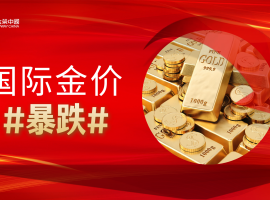 香港打造国际黄金交易中心,金荣中国
2026year1月,国际金价一度攀升至5598dollar/盎司的历史峰值,黄金作为终极价值储备的地位
香港打造国际黄金交易中心,金荣中国
2026year1月,国际金价一度攀升至5598dollar/盎司的历史峰值,黄金作为终极价值储备的地位
 ZFX山海证券:警惕!金价连续下跌!
全球金市周四遭遇显著抛压,金价下跌,主要受美元走强及金融市场整体避险情绪升温影响
ZFX山海证券:警惕!金价连续下跌!
全球金市周四遭遇显著抛压,金价下跌,主要受美元走强及金融市场整体避险情绪升温影响
 ZFX山海证券:金价冲高回落!多空鏖
Wednesday(2month4日)黄金市场上演了一出惊心动魄的“过山车”行情,现货黄金在周三盘中早些
ZFX山海证券:金价冲高回落!多空鏖
Wednesday(2month4日)黄金市场上演了一出惊心动魄的“过山车”行情,现货黄金在周三盘中早些





 Riser card
 Top card
 Silence card
 Color changing card
 lifting jack