Register now, make more friends, enjoy more functions, and let you play in the community easily.
You need Sign in Can be downloaded or viewed without an account?Register Now 
x
In the global financial market, foreign exchangeTrading(Forex Trading)It is a popular investment method that allows investors to make profits through currency exchange. With the high liquidity of the market and24More and more novice investors are interested in understanding the characteristics of hourly operation Foreign exchange transactionsLearn how to operate and how to conduct transactions. However, the foreign exchange market involves numerous concepts such as currency pairs, spreads, leverage, etc., which may appear complex and difficult for beginners to get started with. This guide will guide you through the basic concepts, major currency pairs, trading methods, and risk management strategies of foreign exchange trading in a simple and easy to understand manner, helping you easily enter the foreign exchange market. Whether you are a novice in forex trading or an investor looking to enhance your trading knowledge, this article can help you grasp the core points of forex trading and lay a solid foundation for your investment journey. Next, we will start with the basic concepts of forex trading, step by step break down key knowledge, and take you to a deeper understanding of how to conduct your first trade! What is foreign exchange trading? I'll tell you in simple wordsForeign exchange trading(Foreign Exchange, abbreviated asForex)It refers to the trading behavior of exchanging one currency for another in order to obtain price difference benefits. This is a global market with daily trading volumes reaching trillions of dollars, making it one of the most active financial markets in the world. Whether it's international trade, travel exchange, or investment speculation, foreign exchange trading plays a crucial role. Simply put, the core of foreign exchange trading is to buy one currency, sell another currency, and profit from exchange rate fluctuations. For example, suppose you use1Sterling exchange150The Japanese yen will appreciate in a few days. If you exchange the Japanese yen back to the British pound, the exchange rate will change1Sterling exchange140Japanese yen, so you can earn spread profits. This trading model allows investors to seek opportunities in market price fluctuations and profit through reasonable strategies. The price fluctuations in the foreign exchange market are influenced by various factors, including global economic data, interest rate decisions, political events, etc. Due to rapid market changes, investors need to have certain market analysis skills and pay attention to risk management when engaging in foreign exchange trading to reduce potential losses. Understanding the basic operation of foreign exchange trading is the first step in entering the market. In the following content, we will further analyze the participants in the foreign exchange market, currency pair classifications, and core trading concepts to help you gain a more comprehensive understanding of the basics of foreign exchange trading. Who is trading foreign exchange? Market participants and operational methodsParticipants in the foreign exchange trading marketThe foreign exchange market is the world's largest financial market in terms of trading volume, with daily turnover reaching trillions of dollars. So, who is conducting foreign exchange trading? The participants in this market cover various levels from government agencies to individual investors, and the behavior of each type of participant has varying degrees of impact on the market. Understanding the main participants and their roles in the market helps to better grasp the operation of foreign exchange trading and make wiser investment decisions. 1. Central banks and government agenciesThe central bank is a core participant in the foreign exchange market, responsible for implementing monetary policies, regulating exchange rates, and maintaining market stability. For example, the Federal Reserve(Fed)The European Central Bank(ECB)And the Bank of Japan(BOJ)We will adjust interest rates or intervene in the market according to the economic situation. Adjusting interest rates affects exchange rates: When the central bank raises interest rates, it usually attracts foreign capital inflows and promotes the appreciation of the domestic currency; On the contrary, interest rate cuts may lead to the depreciation of the domestic currency. Market intervention: When currency fluctuations are too high, the central bank may directly buy or sell foreign exchange to stabilize the exchange rate. For example, the Swiss National Bank2015Abandoning the exchange rate ceiling of the Swiss franc against the euro in the year led to severe market volatility.
2. Commercial banks and investment banksCommercial banks play the role of "market makers" in the foreign exchange market, providing currency exchange services and participating in large-scale transactions. Their main functions include: Dealing with international trade fund settlement: Enterprises need to exchange currencies in cross-border trade, and banks provide convenient trading channels. Large scale trading and speculation: Investment banks have professional trading teams that utilize exchange rate fluctuations to earn profits and provide foreign exchange hedging services for institutional clients.
3. Hedge funds and institutional investorsHedge funds, pension funds, and other large investment institutions typically use technical analysis and macroeconomic data to conduct large-scale foreign exchange investments or hedging operations. Due to the large amount of funds in these institutions, their trading often affects market trends. High frequency trading(HFT)Some hedge funds use algorithmic trading to complete a large number of trades in milliseconds, which affects market liquidity. Long term layout: Institutional investors typically allocate currency based on economic cycles, which affects long-term trends.
4. Individual trader (retail investor)With the advancement of internet technology, individual investors can now enter the market for trading through forex brokers. Although the trading scale of retail traders is relatively small, they still hold a certain position in the market due to their large quantity. Leveraged trading: Individual investors can use leverage to amplify trading funds and participate in larger amounts of foreign exchange trading. Short term trading (such as intraday trading): Many retail investors seek profit opportunities in market fluctuations through short-term technical analysis.
Tip: Novice investors should choose regulated forex brokers and start with simulated trading to familiarize themselves with market operations before investing actual funds. 5. Brokers and trading platformsForeign exchange brokers are an important bridge connecting retail traders with the interbank market, providing trading tools, leverage, and market information. The most common trading platforms on the market currently includeMetaTrader 4(MT4)、MetaTrader 5(MT5)AndcTraderThese platforms provide real-time quotes, technical analysis tools, and automated trading functions to help investors conduct forex trading more efficiently. The foreign exchange market is composed of numerous participants whose actions collectively determine the liquidity and price fluctuations of the market. Whether it is government agencies, banks, hedge funds, or individual investors, each market participant has its unique role and trading methods. Understanding the impact of these participants can help you make more accurate decisions in forex trading. How do you view foreign exchange currency pairs? Introduction to major currency pairs and classificationsIn the foreign exchange trading market, every transaction involves a combination of two currencies, which is called a 'currency pair'(Currency Pair). The price of a currency pair refers to the exchange rate fluctuations between two currencies. Traders need to analyze the trend of the currency pair, determine the direction of future price changes, and then develop appropriate trading strategies. What is a currency pair?In foreign exchange trading, each transaction involves the exchange of two currencies, and this currency combination is called a currency pair(Currency Pair). A currency pair consists of two parts: Base currency(Base Currency)The first currency in a currency pair. Quotation currency(Quote Currency)The second currency in a currency pair, used to measure the value of the benchmark currency.
For example, in the Euro/dollar Currency pair, Euro(EUR)It is the benchmark currency, the US dollar(USD)It is the quoted currency, if EUR/USD=1.1000, indicating 1 Euro convertibility 1.10 USD. The main currency pairs in foreign exchange tradingThe liquidity of the foreign exchange market is extremely high, but the trading volume and market influence of different currency pairs vary. The following are the most popular currency pairs in the global forex trading market, which have high trading volume and liquidity, making them suitable for investors to engage in buying and selling operations. Currency pair | Proportion of global trading volume | Characteristics and Importance | EUR/USD(Euro)/USD | about 30% | The currency pair with the highest trading volume and liquidity in the foreign exchange trading market, whose prices are influenced by economic data from Europe and the United States, is suitable for novice and professional traders. | USD/JPY(USD)/Japanese Yen) | about 13.5% | The Japanese yen is one of the safe haven currencies,USD/JPY The exchange rate is influenced by market risk sentiment and the policies of the Bank of Japan, making it suitable for investors who track market fluctuations. | GBP/USD(Pound Sterling)/USD | about 12% | The trading combination of GBP and USD has a large fluctuation range and is suitable for traders with certain market experience. | AUD/USD(Australian dollar)/USD | about 5.4% | The Australian dollar, as a commodity currency, is related to commodity prices such as iron ore and is suitable for investors who wish to participate in resource market trading. | USD/CAD(USD)/Canadian dollar) | about 5% | Due to Canada being one of the world's major oil exporting countries,USD/CAD The exchange rate is closely related to oil prices and is suitable for traders who pay attention to the energy market. | USD/CHF(USD)/Swiss Franc | about 3.5% | The Swiss franc has a safe haven characteristic,USD/CHF The trading volume may increase during market turbulence, making it suitable for investors studying hedging strategies. | USD/CNY(USD)/Chinese Yuan) | about 3% | With the increasing influence of the Chinese economy,USD/CNY The exchange rate is gradually receiving market attention and is greatly influenced by China's monetary policy and global trade changes. |
Currency pairs in the foreign exchange trading market can be classified into three categories based on trading volume and market liquidity: major currency pairs, cross currency pairs, and rare currency pairs. Category | definition | characteristic | Common currency pairs | Major currency pairs(Major Pairs) | The currency pair with the highest trading volume and the strongest liquidity always includes the US dollar(USD) And combined with other major currencies | - High liquidity and low trading costs (spreads) - Stable volatility, suitable for novice investors - Affected by policies and data from major economies | EUR/USD(Euro)/USD USD/JPY(USD)/Japanese Yen) GBP/USD(Pound Sterling)/USD USD/CHF(USD)/Swiss Franc AUD/USD(Australian dollar)/USD USD/CAD(USD)/Canadian dollar) NZD/USD(New Zealand dollars)/USD | Cross currency pairs(Cross Pairs) | Excluding US dollars(USD)Currency pair, directly trading two non US currencies | - Compared to major currency pairs, lower liquidity - The exchange rate fluctuates greatly and is significantly affected by the regional economy - Transaction costs slightly higher than major currency pairs | EUR/GBP(Euro)/Pound Sterling) EUR/JPY(Euro)/Japanese Yen) GBP/JPY(Pound Sterling)/Japanese Yen) AUD/JPY(Australian dollar)/Japanese Yen) EUR/AUD(Euro)/Australian dollar) | Rare currency pairs(Exotic Pairs) | Composed of major currencies and currencies from emerging markets or developing countries | - Low liquidity and high spreads - Large fluctuations, significantly influenced by political and economic policies - High risk, but also significant potential profit opportunities | USD/TRY(USD)/Türkiye Lira) USD/ZAR(USD)/South African Rand USD/BRL(USD)/Brazilian Real USD/MXN(USD)/Mexican Peso USD/INR(USD)/Indian Rupee |
Different currency pairs are suitable for different types of traders, and the following are the considerations when choosing currency pairs: What are spreads, leverage, and point values? Simply understand the key concepts of foreign exchange tradingIn forex trading, spread, leverage, and point value are three core concepts that directly affect trading costs, risk management, and profitability. Understanding these basic concepts can help both beginners and experienced traders develop more efficient trading strategies. 1. What is a spread? How does it affect the cost of foreign exchange trading?spread It is the hidden cost that traders need to pay when buying or selling currency pairs, representing the main source of income for forex brokers. Every currency pair in the foreign exchange market has two prices: Purchase price(Ask)The price that investors are willing to pay, which is the price at which they buy the currency pair. Selling price(Bid)The price at which investors can sell, which is the price the market is willing to pay. Spread calculation method: The difference between the buying price and the selling price is the spread.
For example:
hypothesis EUR/USD What is the buying price for a currency pair 1.1050And the selling price is 1.1048, then the spread is 2 Point(0.0002)。 The impact of spreads on forex tradingThe smaller the spread, the lower the trading cost, making it suitable for short-term trading (such as intraday trading). The larger the spread, the higher the trading cost, which may affect the profit margin and is suitable for long-term traders.
Generally speaking, major currency pairs with high liquidity, such as EUR/USD、USD/JPY)Currency pairs with lower spreads and lower liquidity (such as EUR/NZD、GBP/AUD)The spread is relatively high. 2. What is point value? How to calculate the profit and loss of foreign exchange trading?Point value(Pip Value) It is the smallest unit for measuring price changes in the foreign exchange market. In most currency pairs,1 The dot represents the change to the fourth decimal place(0.0001). But for the Japanese yen currency pair, such as USD/JPY,1 The dot represents the change to the second decimal place(0.01)。 Point value calculation method: about 1 Hand (standard hand) trading: euro/dollar 1 spot ≈ 10 dollar dollar/Japanese yen 1 spot ≈ 1000Japanese yen pound/dollar 1 spot ≈ 10 dollar
Example:
If the transaction 1 hand EUR/USDPrice from 1.1050 Up to 1.1060(Rising) 10 So the potential profit is 10 spot × 10 dollar = 100 USD. Understanding the point value helps investors calculate potential profits and losses, control trading volume reasonably, and manage risks. 3. What is leverage? How to amplify the gains and risks of foreign exchange trading?Leverage(Leverage) It is a powerful tool in foreign exchange trading that allows investors to control larger trading positions with less capital. Leverage can increase profit potential, but at the same time, it can also amplify trading risks. Principle of leverage operation: Assuming the trading platform provides 50:1 Leverage, which means you only need to 1 dollar The margin can be controlled 50 dollar The trading position. For example, transactions 1 Standard Hand(100,000 Unit)EUR/USDIf the leverage is 50:1, then only need to 2,000 dollar Margin, not 100,000 USD. The impact of leverage on tradingHigh leverage: Potential returns increase, but risks are also higher, and even slight price fluctuations may lead to forced liquidation (liquidation). Low leverage: Low trading risk, but requires more capital to achieve the same returns.
Example:
Assuming investors use 100:1 Trading with leverage: transaction 1 Hand(100,000 Unit)EUR/USDIn the account, only 1,000 dollar bond. If the market price changes 50 Point, Profit and Loss = 50 × 10 dollar = 500 USD.
But if the market experiences excessive reverse volatility and investors have insufficient available margin, it may trigger Forced liquidation resulted in a significant reduction in trading funds. Summary: How to use spreads, leverage, and point values to improve the success rate of forex trading?Spread determines trading costs - choose a low spread currency pair (such as EUR/USD)It can reduce costs and increase profit opportunities. Point value measures the impact of price changes - calculating the impact of each price change on profits helps with risk management. Leverage amplifies returns and risks - using leverage reasonably to avoid excessive leverage leading to liquidation.
After mastering these core concepts, you will be able to more accurately control trading risks, improve investment efficiency, and achieve a robust forex trading strategy! How to do forex trading? Common trading methods and order typesOverview of Foreign Exchange Trading TypesIn the foreign exchange market, choosing the trading type that suits oneself is the key for every novice investor to enter the market. Different types of transactions have their own characteristics and applicable scenarios, understanding these methods will help you make wise investment decisions. The following are the four main types of foreign exchange transactions: Transaction Type | introduce | advantage | shortcoming | Applicable scenarios | Spot foreign exchange | Buy and sell foreign currency directly to banks or traders, and the transaction is completed instantly. | Easy to operate, instant transaction | High transaction costs, limited applicability of currency pairs | Suitable for short-term investment or daily currency exchange | Forward foreign exchange | The exchange rate agreed upon by both parties for future delivery is commonly used for enterprise hedging. | Lockable exchange rate to reduce the risk of exchange rate fluctuations | Unable to adjust flexibly, low liquidity | Suitable for enterprises to hedge against exchange rate risks or long-term investors | | Trading standardized contracts on futures exchanges requires delivery on the due date. | High liquidity, standardized contract | Fixed delivery date, high risk | Suitable for institutional investors or investors who wish to avoid short-term exchange rate fluctuations | Foreign exchange margin | Using leverage trading, only a small amount of margin is needed to operate large amounts of funds. | Amplify the potential for profit and have high flexibility | High leverage brings high risks and may amplify losses | Suitable for short-term traders or investors with high risk tolerance |
1. Spot foreign exchange trading Spot foreign exchange is the most direct trading method, and investors can buy and sell foreign currencies in real time. This type of transaction is suitable for beginners, who do not need to wait for delivery and can obtain foreign currency assets after completing the transaction. 📌 Example of operation: If you expect USD(USD)Appreciation can be achieved in Singapore dollars(SGD)Buy US dollars and sell them back to Singapore dollars after the US dollar appreciates to earn exchange rate differentials. 2. Forward foreign exchange trading Forward foreign exchange trading refers to the exchange of currency between buyers and sellers at an agreed price at a future point in time, which is suitable for enterprises to avoid exchange rate risks. 📌 Example of operation: If an importing enterprise expects to pay in three months100In order to avoid the impact of exchange rate fluctuations, a forward foreign exchange contract can be signed with the bank to lock in the exchange rate in advance. 3. Futures and foreign exchange trading Futures and forex contracts are standardized contracts made on futures exchanges, usually with leverage, suitable for more experienced traders. 📌 Example of operation: If you expect USD/Japanese yen(USD/JPY)By appreciating, you can buy US dollar futures contracts and then sell them to earn the price difference when the price rises. 4. Foreign exchange margin trading Foreign exchange margin trading is a way of investing using leverage, where investors only need to provide a certain percentage of margin to increase the trading scale. 📌 Operation example: If you invest200USD margin with leverage of1:200, then it can be traded40,000Funds in US dollars. But if the market trend is unfavorable, the losses will also be amplified. Compared to other types of forex trading, forex margin contracts for difference(CFD)Trading has unique advantages: low capital threshold, flexible two-way trading, and the ability to seize opportunities regardless of market fluctuations. In addition, the account opening process for such transactions is convenient, and most platforms support online completion, allowing investors to quickly enter the market and start trading in a short period of time. These advantages make forex margin trading an ideal choice for many investors to improve their capital utilization. Because of foreign exchange margin differential contracts(CFD)Trading is a leveraged derivative product that involves various factors such as transaction costs, fund security, and execution efficiency, so choosing a contract for difference is necessary(CFD)Traders are quite particular, as explained by the author. And choose a regulated and reliable forex margin contract for difference(CFD)A trading platform is a crucial step in ensuring the safety of funds and fairness of transactions. A high-quality platform can provide a transparent trading environment, professional trading tools, and diverse trading options, creating a good trading experience for investors. Choose a regulated foreign exchange trading platformThe following are globally renowned foreign exchange trading regulatory agencies that provide legal protection and financial security for investors. UK Financial Conduct Authority(FCA)One of the most authoritative financial regulatory agencies in the world, known for its high standards of regulatory requirements. Australian Securities and Investments Commission(ASIC)Strictly regulate the behavior of traders to ensure fair and transparent market operation. National Futures Association(NFA)Comprehensive monitoring of traders to protect investor rights. EU Financial Instruments Market Management(MiFID)Covering transaction regulation within the European Union and providing unified transaction standards. Cyprus Securities and Exchange Commission(CySEC)Supported by the EU regulatory framework, providing good market compliance.
Choosing a platform certified by the above-mentioned regulatory agencies can not only effectively reduce investment risks, but also ensure fund transparency and provide guarantees for the trading process. This is particularly important for beginners in foreign exchange trading, as it is the first step towards stable investment. Here are some widely recognized foreign exchange trading platforms The final marketVantage、IC MarketsWait, they are all subject to the supervision of one or more regulatory agencies mentioned above. Due to the author's general usageUltima MarketsI am familiar with trading, so I recommend itUltima Markets。 Ultima Markets The trading platform is a well-known Australian real estate developerViapac GroupA subsidiary of Pan Pacific Group, subject to the Cyprus Securities and Exchange CommissionCySECAustralian Securities and Investment CommissionASICThe Mauritius Financial Services Commission(FSC)Regulation. Tradeable on the platform60Multiple foreign exchange currency pairs that can also be traded goldPrecious metals such as silver, US stocks, stock indices, and various financial products such as Bitcoin. Secondly,Ultima Marketsprovide0Commission, low price difference, leverage ratio from1to2000Optional, minimum trading volume as low as0.01Hand. Ultima MarketsThe trading software has multiple trading tools, such as stop loss and stop profit, tracking stop loss, and real-time trading signals. Ultima Markets Award recognition If you are not ready to engage in real money trading, simulated trading is an excellent choice.Ultima Markets Provide free simulation accounts to simulate real market environments, allowing you to: Familiar with the operation process of foreign exchange trading platforms; Test your trading strategy and adjust your plan; Accumulate confidence in a safe environment and prepare for real transactions.
Through simulated trading, you can grasp market rules, enhance sensitivity to market fluctuations, and lay a solid foundation for future real trading. Foreign exchange trading order types: how to choose suitable trading instructions在掌握了外汇交易的主要方式后,投资者还需了解各种下单类型,以便根据市场状况灵活调整交易策略。选择合适的下单方式不仅能提高交易效率,还能有效控制风险,避免因市场波动导致错失良机或遭受不必要的损失。 外汇市场中,常见的下单类型包括市价单、限价单、止损单、挂单交易等,每种类型都有其适用场景,投资者应根据交易计划灵活运用。 1. Market order(Market Order):即时成交,适合快速交易Definition:
市价单指的是按照当前市场价格立即成交的订单,是最常见且最简单的下单方式。 特点与适用场景:
✔ Advantages: 立即执行,不会错失交易机会 适合市场波动较小时快速买入或卖出
❌ Disadvantages: ✅ Applicable scenarios: 🔹 Example
如果当前EUR/USD的报价为1.1050/1.1052,投资者想立即买入欧元,可直接执行市价单,以1.1052的价格成交(买入价)。 2. Limit order(Limit Order):控制价格,等待最佳买卖时机Definition:
限价单是指投资者预设一个目标价格,当市场价格达到该水平时,订单才会执行。例如,买入限价单(Buy Limit)只有当市场价格低于或等于设定价格时才会成交,而卖出限价单(Sell Limit)则是当市场价格高于或等于设定价格时成交。 特点与适用场景:
✔ Advantages: ❌ Disadvantages: 订单可能无法成交,因为市场价格可能未触及设定价格 可能错过突发行情带来的快速机会
✅ Applicable scenarios: 🔹 Example
IfEUR/USD目前报价为1.1050,但投资者希望在1.1020买入,可以设置买入限价单(Buy Limit),当价格下跌到1.1020时,订单才会执行。 3. Stop loss order(Stop Order):控制风险,保护交易资本Definition:
Stop loss order(Stop Order)是一种在市场价格达到预设水平时,才触发执行的订单。通常用于限制损失或确认趋势突破,主要分为买入止损单(Buy Stop)和卖出止损单(Sell Stop)。 特点与适用场景:
✔ Advantages: 能有效限制损失,适合风险管理策略 可用于突破交易策略,当价格突破关键水平时自动入场
❌ Disadvantages: ✅ Applicable scenarios: 🔹 Example
IfEUR/USD目前价格为1.1050,投资者做多,担心市场反转亏损,可设置止损单在1.1020,当价格跌至1.1020时,自动卖出以控制风险。 4. 挂单交易(Pending Order):预设条件,自动执行交易Definition:
挂单交易是一种预设条件的交易方式,当市场价格达到特定水平时,自动触发交易。主要包括限价挂单(Limit Orders)和止损挂单(Stop Orders),适合无法时刻盯盘的投资者。 特点与适用场景:
✔ Advantages: ❌ Disadvantages: ✅ Applicable scenarios: 🔹 Example
如果投资者预期EUR/USDstay1.1100会突破并持续上涨,可以设置买入止损挂单(Buy Stop),当价格达到1.1100时,自动执行买入操作。 外汇交易风险管理策略:降低风险的基础方法在外汇交易市场中,风险管理与交易策略同样重要。即使拥有再高超的交易技巧,如果缺乏有效的风险控制,也可能面临重大亏损。新手投资者应该从基础策略入手,逐步建立稳健的交易模式,以确保资金安全并提高长期获利的可能性。本节将针对外汇交易的核心风险管理方法,帮助新手在市场中稳健发展。 1. 设置合理的杠杆比例,降低交易风险外汇交易的杠杆机制虽能放大获利,但同时也会加剧潜在风险。新手投资者应谨慎选择杠杆比例,以确保交易风险在可控范围内。
✅ 选择适当杠杆倍数:建议新手使用1:10or1:30的杠杆,避免因过度杠杆导致资金快速耗尽。
✅ 根据资金规模调整杠杆:资金充足时可适当降低杠杆,确保交易空间更灵活。
✅ 避免重仓交易:每笔交易的风险不应超过总资金的2-5%,以降低单次亏损对整体资金的影响。 2. 设定止损与止盈点,确保交易计划执行在外汇交易中,设置止损(Stop Loss)And take profit(Take Profit)点是控制风险的关键策略,可帮助投资者在市场波动中保护资本。
✅ 依据市场波动性设置止损:如高波动市场(如非农数据发布期间)可设置较宽的止损点,避免短暂波动导致提前止损。
✅ 止盈与止损比例合理:一般建议设定1:2或更高的盈亏比,即预期获利应至少为潜在亏损的两倍。
✅ 严格执行止损策略:一旦价格触及止损点,应果断平仓,避免因情绪影响导致更大损失。 📌 实例:若您在欧元兑美元(EUR/USD)交易中设定30点止损与60点止盈,当市场价格达到止盈点时,系统将自动平仓,确保利润落袋。 3. 采用多样化交易策略,降低单一市场风险新手投资者不应过度依赖单一交易策略,而应根据市场环境灵活调整,提升整体稳定性。
✅ 短线交易策略(Scalping & Day Trading):适合市场高波动时,快速进出市场获利。
✅ 中长线交易(Swing & Position Trading):适用于市场趋势明显时,以较长持仓时间捕捉大波段走势。
✅ 风险对冲(Hedging):可通过同时持有相关货币对的多空仓位,降低市场单边波动风险。 📌 案例分析:若美元指数走强,投资者可做多美元兑欧元(USD/EUR),同时做空美元兑日元(USD/JPY),以对冲美元市场的潜在波动风险。 4. 合理规划资金管理,确保交易持久性资金管理是外汇交易成功的关键,应避免将过多资金投入单一交易,以防止市场突变导致严重损失。
✅ 设定每笔交易的风险比例:建议单笔交易风险控制在总资金的1-2%。
✅ 分散投资:避免将所有资金集中于一个货币对,而是同时关注多种交易机会。
✅ 避免情绪化交易:亏损后应冷静分析原因,而非盲目加仓或重仓试图翻本。 📌 实际应用:若投资者拥有10,000美元资金,应确保单笔交易最多承担200美元风险(2%原则),以提高交易稳健性。 5. 定期回顾交易纪录,优化交易策略成功的外汇交易者会持续分析过去交易纪录,从中找出优势与不足,进一步优化交易计划。
✅ 记录每笔交易:包括进场点、止损止盈设置、交易结果及市场影响因素。
✅ 分析成功与失败交易:找出获利模式与常见错误,避免重复犯错。 f
✅ 调整交易策略:根据市场变化与个人交易表现,优化技术指标、交易周期与仓位控制。 📌 建议工具:可使用Excel表格、交易日记或交易软体(如MetaTrader 4/5 的交易报告)记录交易数据,方便后续分析。
| 


 Aurra Markets:【每周外汇市场展望
未来一周的主要市场趋势有哪些?当前,全球市场释放出相互矛盾的信号,在居高不下的
Aurra Markets:【每周外汇市场展望
未来一周的主要市场趋势有哪些?当前,全球市场释放出相互矛盾的信号,在居高不下的
 Aurra Markets:大型银行拉开财报季
即将到来的财报季对标普 500 指数有何影响?随着投资者为即将到来的财报季做准备,
Aurra Markets:大型银行拉开财报季
即将到来的财报季对标普 500 指数有何影响?随着投资者为即将到来的财报季做准备,
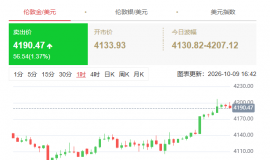
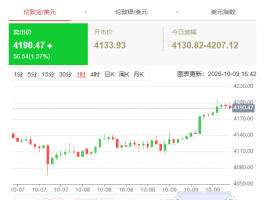 Gold Rush Up 4200Recovering all the losses of this week!
Gold suddenly rose violently and stood on the platform 4200 The US dollar has surged nearly in a single day 70 The US dollar, this surge, don't blindly follow the trend and be bullish
Gold Rush Up 4200Recovering all the losses of this week!
Gold suddenly rose violently and stood on the platform 4200 The US dollar has surged nearly in a single day 70 The US dollar, this surge, don't blindly follow the trend and be bullish
 Aurra Markets:【WTI Outlook for Crude Oil Trends
WTI crude oil 90 The US dollar barrier: Is it technical support or downside risk?WTI Crude oil is currently being tested 90 The USD level
Aurra Markets:【WTI Outlook for Crude Oil Trends
WTI crude oil 90 The US dollar barrier: Is it technical support or downside risk?WTI Crude oil is currently being tested 90 The USD level
 Aurra MarketsJPMorgan Chase's stock price falls 5%
Why should investors consider buying JPMorgan Chase stocks on dips before the release of financial reports? With JPMorgan Chase(JPMorgan Chase
Aurra MarketsJPMorgan Chase's stock price falls 5%
Why should investors consider buying JPMorgan Chase stocks on dips before the release of financial reports? With JPMorgan Chase(JPMorgan Chase






 Riser card
 Top card
 Silence card
 Color changing card
 lifting jack