Register now, make more friends, enjoy more functions, and let you play in the community easily.
You need Sign in Can be downloaded or viewed without an account?Register Now 
x
In daily work, we have learned from communicating with some traders that they are really careless and adopt a hasty attitude towards trading. These traders have no idea how many trades they make in a day or week, or even how many profits and losses they make.
It's like you're a football coach, but you don't remember what you just played5A game, or you are a company owner but don't know the sales and growth data of the company last month.
Simply put, making money means having principles, consistency, and most importantly, being able to make a profit. A principled trader can make a profit. Persisting in recording transaction logs is the first step in establishing principles.
No matter what profession you are in, if you turn a blind eye to your past performance, you will have no possibility of making any progress.
Why do you need to record transactions?
Why do we need to keep records? Ask yourself why you need to keep good transaction records and what your purpose is. Many times, even if a trader decides to start recording trades, their starting point and purpose are often incorrect. Recording for the sake of recording, or starting to record because you always see others saying that recording is important, cannot help you become a better trader.
Recording transactions is not just about keeping track of your entry and exit prices and trading times. Transaction records can also help you improve your skills and master trading philosophy. More precisely, it is related to your emotional fluctuations before, during, and after trading.
You need a clear goal, and then adjust and manage the key points of the records around this goal. Do you want to adjust your trading mindset and principles? Do you want to know what has consumed too much capital and how to overcome these problems? Do you want to analyze stop loss and profit levels, and then improve your trading skills?
The answers to these questions correspond to very different recording methods. Every trader usually has very different goals, so the first step is to determine what you want to improve.
Three methods to record your transactions
The recording method we usually use is3Seed. Choosing the wrong method often leaves traders confused and without progress.
1.Relying on the brain to remember transactions
This is the most commonly used method by many traders, who are obviously too confident in their memory. Let's go back to the original question: 'Do you remember what you just did?'10Is it a transaction? How much do you remember? ”. Without explicit recording, you cannot visually compare data, which is not beneficial for trading.
2.Record with paper and pen
When a novice trader decides to start recording trades, he usually chooses to use a pen and paper to do the recording. This paper and pen recording method is much better than not recording, but it is far from being a good method.
3.Transaction records with result analysis
We recommend computer trading systems that can help record transactions. Many trading platforms have many features to help analyze trades and provide trading feedback. By utilizing existing analysis tools, it is more convenient and efficient to identify the location of trading issues, which can help you track more data. Moreover, electronic records are simpler than paper notes.
What do you need to record in the transaction?
1.Entrance location
The entry location tells you when you should enter the potential trading area for trading.
2.Position size
This is very simple. Based on the risk management rules you have set in your trading plan, you must determine and record the size of your position. This lets you know what your maximum risk is. How much risk are you willing to take in each transaction?
3.Transaction Management Rules
Before you consider entering into trading, you should have a plan in place. This plan tells you how to manage this transaction, whether it benefits you or will result in losses. Entering a trade is easy, and only when leaving the trade can you determine whether it is a profit or a loss. Your trading management rules should be established before trading.
4.Transaction Review
Reviewing means looking at what happened before. When you end a trade, calling friends, dancing, and drinking can be tempting, but it's important to reflect on how your trade was conducted, whether it was profitable or not. You need to review the entire process and identify what went right and what went wrong.
|
"Small gifts, come to Huiyi to support me"
No one has offered a reward yet. Give me some support
|





 2026What are the legitimate gold investment software for the year?
2026The intensification of global economic fluctuations in the year has highlighted the safe haven and preservation properties of gold speculation, attracting a large number of investors to enter the market
2026What are the legitimate gold investment software for the year?
2026The intensification of global economic fluctuations in the year has highlighted the safe haven and preservation properties of gold speculation, attracting a large number of investors to enter the market
 2026London Gold's official platform ranking has been released! Six major holdings
With the intensification of global economic uncertainty, frequent geopolitical conflicts, and sustained high inflation pressure, London gold has become a classic
2026London Gold's official platform ranking has been released! Six major holdings
With the intensification of global economic uncertainty, frequent geopolitical conflicts, and sustained high inflation pressure, London gold has become a classic
 International gold prices fluctuate and fall, Jinrong China's' horse to success'
Recently, the international gold market has staged a volatile drama of rising and falling, with spot gold prices breaking through at one point5500dollar/ounce,
International gold prices fluctuate and fall, Jinrong China's' horse to success'
Recently, the international gold market has staged a volatile drama of rising and falling, with spot gold prices breaking through at one point5500dollar/ounce,
 Crude oil price difference contract(CFD)Full analysis: from the basics
Do you also want to participate in the ups and downs of the international crude oil market, but are hindered by complex crude oil futures rules and high funding thresholds
Crude oil price difference contract(CFD)Full analysis: from the basics
Do you also want to participate in the ups and downs of the international crude oil market, but are hindered by complex crude oil futures rules and high funding thresholds
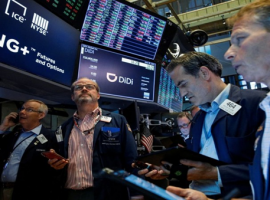 The US stock futures index rebounded collectively!3Depth of major driving factors
After experiencing the recent market fluctuations, are you both excited and confused about the sudden collective rebound of US stock futures indexes? For
The US stock futures index rebounded collectively!3Depth of major driving factors
After experiencing the recent market fluctuations, are you both excited and confused about the sudden collective rebound of US stock futures indexes? For





 Riser card
 Top card
 Silence card
 Color changing card
 lifting jack